
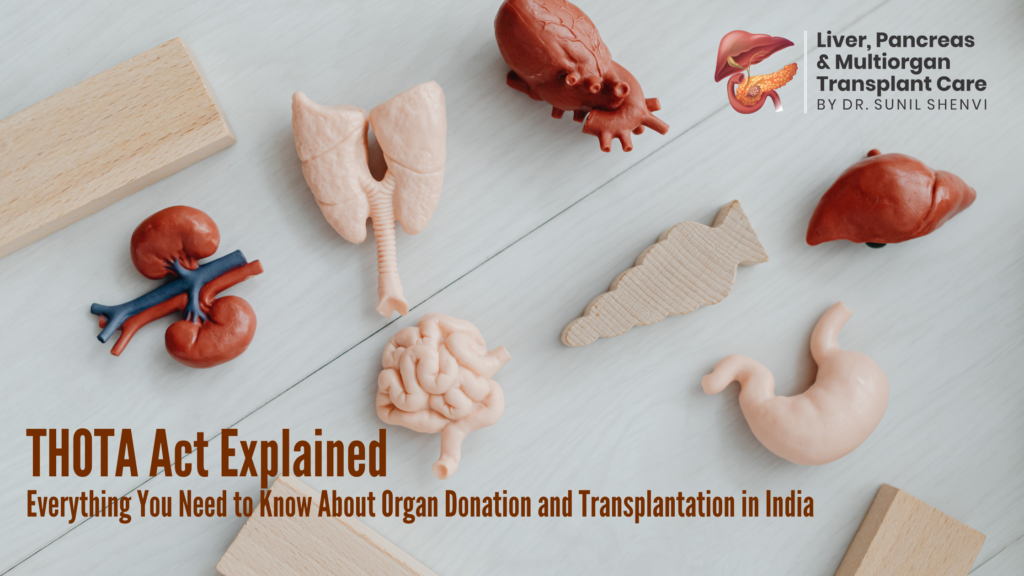
Every organ donation has the power to save lives.A single deceased donor can save and improve the lives of several patients suffering from end-stage failure of the kidneys, liver, heart, lungs, pancreas, and other vital organs. Yet, despite its life-saving potential, many people remain unaware of the legal safeguards that ensure organ donation is ethical, transparent, and safe in India. This is where the Transplantation of Human Organs and Tissues Act (THOTA) plays a vital role.
What Is the THOTA Act?
The Transplantation of Human Organs and Tissues Act (THOTA), originally enacted in 1994 and subsequently strengthened through amendments, is India’s principal legislation governing organ and tissue donation and transplantation. The Act was introduced to regulate the removal, storage, and transplantation of human organs and tissues while preventing their commercial exploitation.
Its primary objectives are to:
- Promote ethical and transparent organ donation and transplantation.
- Prevent the illegal buying and selling of human organs.
- Protect the rights and safety of both donors and recipients.
- Ensure that every transplant is carried out with proper medical evaluation, informed consent, and legal oversight.
By establishing a clear legal framework, THOTA has helped build public confidence in India’s organ transplantation system.
Legal Recognition of Brain Stem Death
One of the most significant contributions of the THOTA Act is the legal recognition of brain stem death.
Brain stem death occurs when the brain stem permanently and irreversibly stops functioning. Although the heart may continue beating with the support of a ventilator, the individual has legally and medically died.
Under THOTA, brain stem death must be certified by an authorised medical board following a strict legal protocol. Only after this certification—and with the appropriate consent—can organs be retrieved for transplantation.
This provision has made deceased organ donation possible, allowing one donor to save multiple lives.
Who Can Donate Organs?
The THOTA Act permits living organ donation between close relatives, including:
- Parents
- Children
- Siblings
- Spouses
- Grandparents
- Grandchildren
Living donation from unrelated individuals is also allowed in exceptional and genuine cases. However, such donations require careful evaluation and approval from an Authorisation Committee, which verifies that the donation is voluntary and free from financial inducement, coercion, or exploitation.
This rigorous approval process safeguards both donors and recipients while maintaining the integrity of the transplant system.
Safeguards Against Illegal Organ Trade
A cornerstone of the THOTA Act is its firm stance against organ trafficking.
The commercial buying and selling of human organs is a criminal offense under Indian law and carries stringent penalties, including imprisonment and substantial fines. The Act also provides for action against healthcare professionals or institutions found to be involved in unethical transplantation practices.
These safeguards protect vulnerable individuals from exploitation and reinforce public trust in the country’s organ donation programme.
Dispelling Common Myths About Organ Donation
Despite the legal safeguards in place, misconceptions about organ donation continue to discourage many potential donors. One of the most common myths is that doctors may not make every effort to save the life of a registered organ donor.
This belief is completely unfounded. The medical team’s first and only priority is to save the patient’s life using every available treatment. Organ donation is considered only after all lifesaving measures have failed and death has been declared in accordance with the strict medical and legal criteria laid down under the THOTA Act.
Understanding this distinction can help families make informed decisions during difficult times.
Why Public Awareness Matters
India continues to face a severe shortage of organ donors. Every year, thousands of patients remain on waiting lists for life-saving transplants, while many die before a suitable organ becomes available.
Increasing awareness about the THOTA Act can help dispel myths, encourage informed conversations within families, and inspire more people to pledge their organs. Greater public understanding of the law is essential to bridging the gap between the demand for organs and their availability.
A Gift That Lives On
Organ donation is far more than a medical procedure—it is one of the most profound acts of generosity a person can make. A single decision has the potential to save multiple lives, restore hope to families, and create a lasting legacy of compassion.
By understanding your rights under the THOTA Act, discussing your wishes with your loved ones, and supporting ethical organ donation, you can help build a society where the gift of life is shared with dignity, humanity, and trust.
One donor can save many lives. Awareness today can become hope for someone tomorrow.